If you’ve ever tried to record a song, film a video, start a podcast, or even work from home in peace, you’ve probably realized that noise has a sneaky way of ruining the moment. Maybe it’s the hum of your neighbor’s lawnmower, the echo in your room making your voice sound hollow, or the street noise creeping into your recordings.
Professional studios solve this problem with fancy acoustic treatments and soundproofing — but those setups can cost a small fortune. Luckily, you don’t need deep pockets to make your space sound significantly better. You can build an acoustic wall yourself for a fraction of the price and without specialized skills.
In this complete guide, we’ll walk through how to create an effective DIY acoustic wall on a budget. We’ll cover the science behind it, exactly what materials to use, where to place your panels, and step-by-step building instructions. By the end, you’ll be able to build something that not only works but also looks good in your room.
1. What an Acoustic Wall Actually Does (and Doesn’t Do)
Before we pick up tools, it’s important to understand what you’re building. An acoustic wall is not magic — and it’s not the same as soundproofing.
Soundproofing is about keeping sound from entering or leaving a space. That’s the heavy-duty work: adding mass, sealing air gaps, and using specialized materials to block noise.
Acoustic treatment is about improving the sound inside a room by controlling reflections, echoes, and reverberations.
An acoustic wall belongs to the second category. It will make your space sound clearer, tighter, and more controlled, but it won’t stop your neighbor’s barking dog from being heard in the background.
Think of it like this:
Soundproofing is putting up a brick wall so noise can’t pass through.
Acoustic treatment is hanging thick curtains inside so the sound in the room behaves nicely.
If you want to make your recordings cleaner, improve audio clarity during calls, or simply enjoy a calmer-sounding room, this is the project for you.
2. The Simple Science of Acoustic Treatment
When you talk, sing, or play music in a room, sound waves travel in all directions. Some go straight to your ears or microphone — but most bounce off walls, ceilings, and floors before reaching you again. These reflections mix with the original sound and create problems like:
Echo – that repeating, distant-sounding effect.
Reverberation – a lingering tail of sound that makes things muddy.
Standing waves – specific frequencies that build up and make certain notes boom.
Acoustic walls work by absorbing these reflections before they bounce back to you. They do this using porous materials like mineral wool or acoustic foam, which let sound waves enter and then trap their energy.
Here’s the important part:
The material must be breathable. If you cover insulation with plastic, leather, or anything airtight, sound waves will bounce off instead of being absorbed. That’s why fabric choice matters.
3. Planning Your Budget
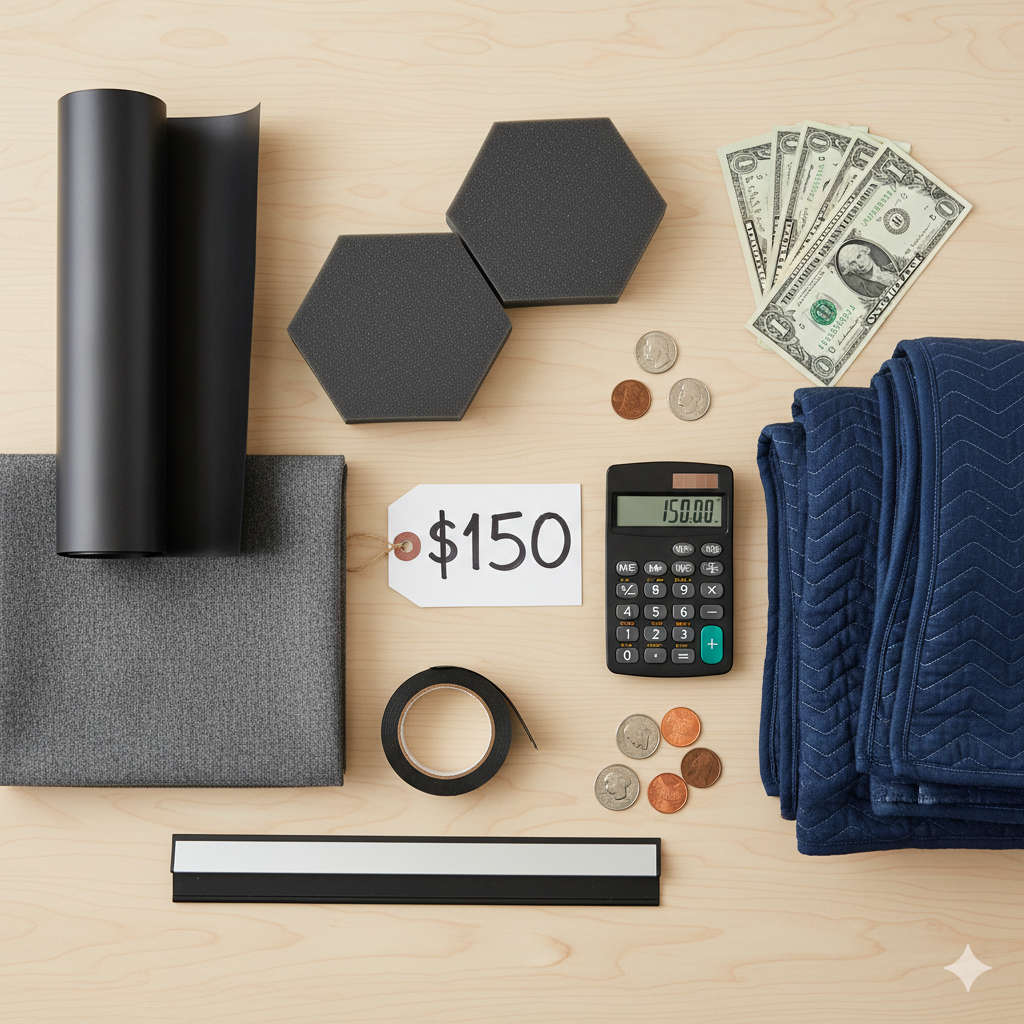
You can absolutely build an acoustic wall for under $100 if you keep things simple. Here’s a realistic cost breakdown for one wall-sized section:
Material
Estimated Cost (USD)
Wooden frame (furring strips or 1×3 boards)
$15–$25
Insulation (Rockwool or fiberglass)
$20–$50
Breathable fabric (burlap, cotton, or polyester blend)
$15–$30
Screws, brackets, and staples
$5–$10
Mounting hardware (hooks, cleats, etc.)
$5–$15
Total
$60–$130
Compare that to commercial acoustic panels, where a single 4×2 ft panel can cost $100–$200, and you can see the savings.
If you need to cover an entire wall, you’ll just multiply these costs by the number of panels you need.
4. Gathering Tools and Materials
You don’t need a full woodworking shop — just basic tools most households already have.
If you want your acoustic wall to look extra polished, you can also add decorative trim or paint the frame before wrapping it.
5. Step-by-Step: Building Your DIY Acoustic Wall
Let’s get into the build itself.
Step 1: Measure Your Wall Area
Decide how much of the wall you want to cover. Covering the entire wall with absorbers is ideal for a recording studio, but for most home setups, targeting the first reflection points is more cost-effective.
To find reflection points:
Sit in your main listening or recording position.
Have a friend move a mirror along the wall — wherever you can see your speakers or mouth in the mirror is a reflection point.
This is where your panels should go.
Step 2: Build the Wooden Frame
Your frame is essentially a shallow box that holds the insulation.
Cut two vertical pieces and two horizontal pieces of wood to your desired size.
Standard panel size is 48” × 24”.
Use screws and corner brackets to join the pieces into a rectangle.
For larger panels, add a central cross brace to prevent sagging.
Pro tip: Check that your frame is square by measuring diagonals — both should be the same.
Step 3: Insert the Insulation
Place your insulation inside the frame. It should fit snugly without being squashed.
If using Rockwool or fiberglass:
Wear gloves, a mask, and long sleeves.
Handle gently to avoid breaking it into uneven pieces.
If the insulation feels loose, you can staple a layer of thin fabric or mesh to the back of the frame before inserting it.
Step 4: Wrap in Fabric
This is both functional and decorative.
Lay your fabric face-down on a clean floor.
Place the frame (with insulation) face-down on top of it.
Pull the fabric tight over one side and staple it to the frame.
Move to the opposite side, stretch the fabric, and staple it.
Repeat for the other two sides, folding corners neatly like a gift wrap.
Choose a fabric color that matches your room’s decor for a more finished look.
Step 5: Mount the Panels to Create a Wall
To make an “acoustic wall,” mount multiple panels side-by-side with minimal gaps.
Mounting methods:
French cleats: Secure and allow easy removal.
D-rings and hooks: Simpler but less flush.
Direct screw mounting: Most secure but permanent.
For the cleanest look, keep panel edges aligned and level.
Step 6: Test and Adjust
After mounting, stand in your listening or recording position and clap your hands.
You should hear a shorter, less “ringy” echo. Speech should sound more focused, and recordings will capture fewer unwanted reflections.
If you still notice trouble spots, consider adding a few smaller panels or corner bass traps.
6. Budget-Friendly Substitutions
If you’re working with an extremely tight budget, here are some alternatives:
Old blankets or duvets: Not as effective as Rockwool, but they will reduce some echo.
Repurposed wood: Use scrap wood or thrift store picture frames as panel bases.
Bed sheets: Light cotton sheets can substitute for burlap.
Carpet remnants: Can add absorption, though mainly for high frequencies.
One warning: avoid egg cartons. They do not meaningfully absorb sound — at best, they slightly diffuse high frequencies.
7. Common Mistakes to Avoid
Using airtight fabric – Sound must pass through to be absorbed. Vinyl, leather, or plastic-coated materials will ruin effectiveness.
Overcompressing insulation – Crushing the insulation reduces its ability to trap sound waves.
Leaving big gaps – Sound will bounce between untreated spaces.
Ignoring bass – Low frequencies build up in corners; consider bass traps for fuller control.
Poor placement – Panels work best at ear height for the primary listening or recording position.
8. Maintenance and Care
Your acoustic wall will last for years with basic upkeep:
Dust regularly with a vacuum’s brush attachment.
Check mounting hardware annually, especially for heavy panels.
Replace fabric if it fades, rips, or gets dirty.
Avoid dampness — moisture can damage insulation over time.
9. When to Upgrade
A basic DIY acoustic wall will dramatically improve mid- and high-frequency clarity. But if you want a truly balanced room, consider:
Adding bass traps for low-frequency absorption.
Installing diffusers to scatter sound evenly and prevent a “dead” room feel.
Using measurement microphones and acoustic analysis software to fine-tune placement.
10. The Big Picture
An acoustic wall is one of the most impactful and affordable improvements you can make to your audio environment. Whether you’re a musician, content creator, gamer, or just someone who values peace and quiet, this project will pay off every time you speak, record, or listen in your space.
With a bit of planning, a free afternoon, and around $100, you can create a wall that looks professional, sounds great, and makes you wonder why you didn’t do it sooner.